

“Men take everything that happened and try to make a story out of it…But when the tale becomes too complicated they just…leave things out” (LaValle 125).
When my students tell me that they don’t like to read, I ask about what they enjoy watching, what they like listening to. The way in is to find what they enjoy; the medium that the story is communicated through is less important than the story being told.
A few years ago, I had a student who hated books. Despite being left back twice, he was extremely self-aware and intelligent. He was less concerned with academics but lit up when talking about food and cooking. When we read Othello in class, he always wanted to be the titular character. Other students teased him because of his choice to be the Black character while also being one of the few Black students in the school, but he channeled that ire into terrific performances every day.1
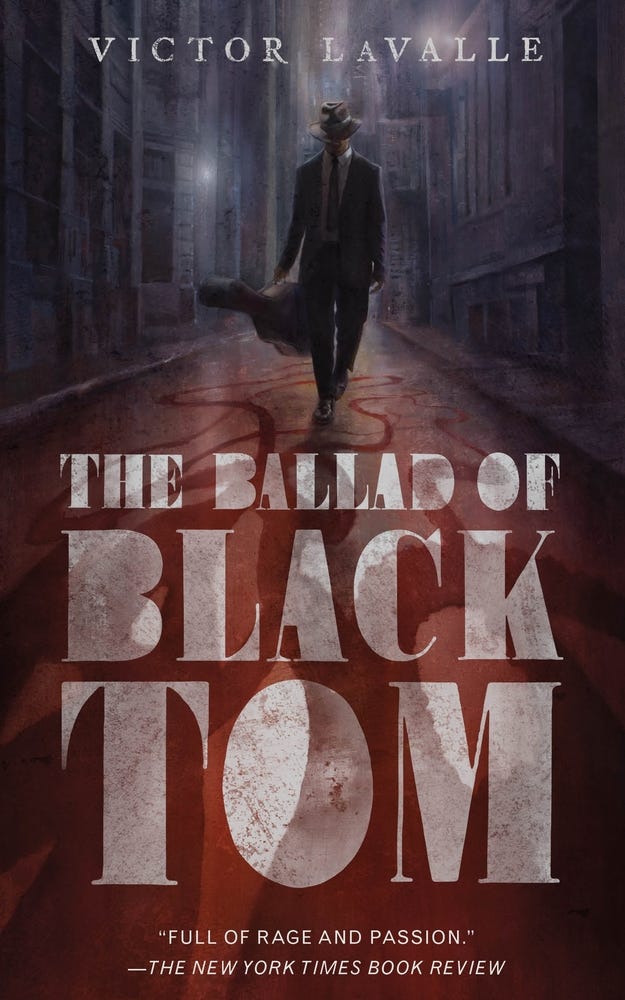
When I assigned my class a project for which they needed to independently read a fiction book of their choice, I suggested this student read Victor LaValle’s The Ballad of Black Tom, a novella retelling of “The Horror at Red Hook” by H.P. Lovecraft. LaValle told the story of “Red Hook” from the point of view of a Black man because Lovecraft is as acclaimed for cosmic horror as he is notorious for his blatant racism. Reinventing the story (including Lovecraft’s racism as plot point instead of a trait inherent in his writing) allowed LaValle to modernize a pillar of horror by valorizing people of color. My student ultimately loved the book—perhaps for its brevity as well as its content—so much so that he told me that I proved him wrong and made him enjoy reading.
Perhaps I should have retired from teaching at that moment.
The Ballad of Black Tom was my introduction to LaValle, but Lone Women is where I fell in love with his writing.
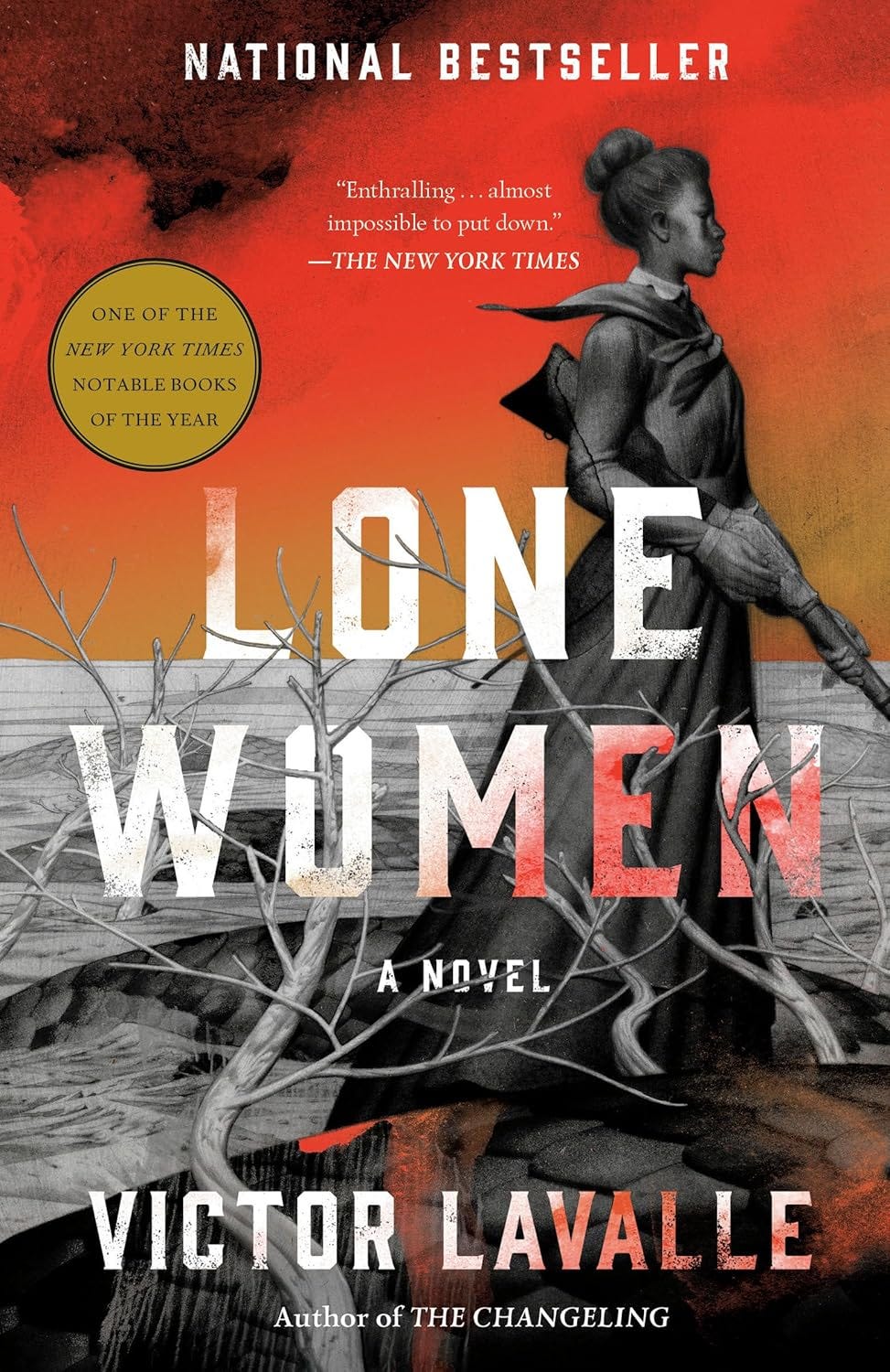
Lone Women tells the story of Adelaide Henry, a woman moving out to start a homestead in the real town of Big Sandy, Montana in 1915. She has nothing but a secret kept locked in a steamer trunk. This secret is her curse as much as it is her burden.
Lone Women is billed as a horror novel, which is typically LaValle’s bread and butter. The further I progressed into the novel, however, the more it read as historical fiction.
Due to its literary merit, I shortlisted the novel for consideration in my 12th grade English class. Although I ultimately didn’t go with this book, there is much readers can appreciate—especially those who fashion themselves as storytellers.
Three Takeaways for Storytellers
Third-person Omniscient Perspective
Adelaide Henry is only the first lone woman introduced in the novel. Please note, though: The title is plural. Slowly but surely more characters are introduced, including Adelaide’s immediate family as well as the neighbors and leaders she meets once she arrives at Big Sandy. LaValle ensures that every character introduced is more than just a trope on the page. There are antagonists, but there are no villains. There is good, but I’m not sure I can pinpoint anyone as fully evil.
In genre fiction it is condoned and sometimes encouraged to employ less fully realized characters. It feels good to root for the good guys, and it feels great to hate the bad guys. LaValle avoids that conversation entirely by using a third-person omniscient perspective, which allows him to venture into the minds of various characters, causing readers to empathize—or at the very least, sympathize—with everyone. He uses third-person point-of-view masterfully. Besides worrying that no character was safe from harm, I found myself fist-pumping, tearing up, and shaking my head in shame and disappointment at so many people, but never did I fully love or hate anyone—aside from a specific member of the Henry family.2
LaValle’s characters are all just flawed people, which makes them more real, and “real” characters should occupy a lived-in world.
World-building
Something I never truly understood was this idea of “world-building.” I always took it to mean constructing the setting and fleshing out the nooks and crannies of a story’s world to make it feel almost tactile and real. This is something that the best comics creators excel at: making the fantastical worlds their characters exist in become “real” via how creators make us feel through their characters’ thoughts, feelings, and actions. How did they do that?
LaValle unlocked this technique for me. World-building doesn’t exclusively happen in the setting. In fact, I would resist that notion and declare that world-building occurs in characters being themselves in one’s fiction. By crafting almost every person3 into a layered, multidimensional figure instead of a stereotype or caricature, LaValle makes Big Sandy feel as vivid as Gotham City in the best Batman media.
Ultimately, like our lives, what makes a world more interesting are the characters that inhabit it. In the same way that we return to our favorite bars, bookstores, clubs, tattoo parlors, haircutters, and more: it’s all about the people. The people make the world we live in colorful, interesting, and worth taking a closer look at.
Genre Mash-ups
LaValle uses his reputation as a horror-leaning, speculative fiction writer to play with readers. I went into the novel expecting terror and dread through the lens of something supernatural or fantastical. While that unspoken promise of branding is kept, LaValle subverts expectations by crafting a genuinely compelling historical, survival fiction book. In doing so, Lone Women goes beyond being another speculative fiction or magical realism novel. Maybe this is what people refer to as “postmodern,” but I mostly just think of it as doing something new and playful with a form that can be so weathered. By amalgamating various genres, LaValle creates something wholly new that feels familiar, which is the exact wheelhouse of an audience. Although people like to be surprised, they cannot feel too distant from the story in front of them, lest authors risk isolating them from caring about their characters and themes. LaValle manages to walk that tightrope perfectly.
Packing Up
I went into Lone Women looking for a contemporary novel to teach to my 12th grade English class. While it didn’t slot into the space I sought to fill in our curriculum, I found myself feeling invigorated by its hard-earned, weatherworn ending. Upon finishing the novel, I felt as though I’d had a nourishing, delicious meal that challenged and ultimately expanded my palate. Similarly, it made me want to cook up a story just as palatable and stirring.
Don’t be afraid to open your own steamer trunk. Whatever is inside might love you more than you can understand.
Sadly this student did not graduate but rather left the school where I work. I hope he is well and that I will meet him again one day as an established chef, finally able to try his cooking.
Feel free to take a guess who, should you read it.
I’m looking at you, Mrs. Sterling’s son.